Key contributions

  • Designed Conversational AI for senior.
  • Orchestrated design sprints to optimize usability, reducing user drop-off.
  • Delivered functional design artifacts and prototypes for usability testing.

Team

  • Clinical team
  • Optum Research Group
  • Sr UX Designer, ML Engineering Lead, Clinical Team

Duration

  • Nov 2024 - Present
INTRODUCTION

Optum - Pre-Visit Assessment

About Pre-Visit Assessment

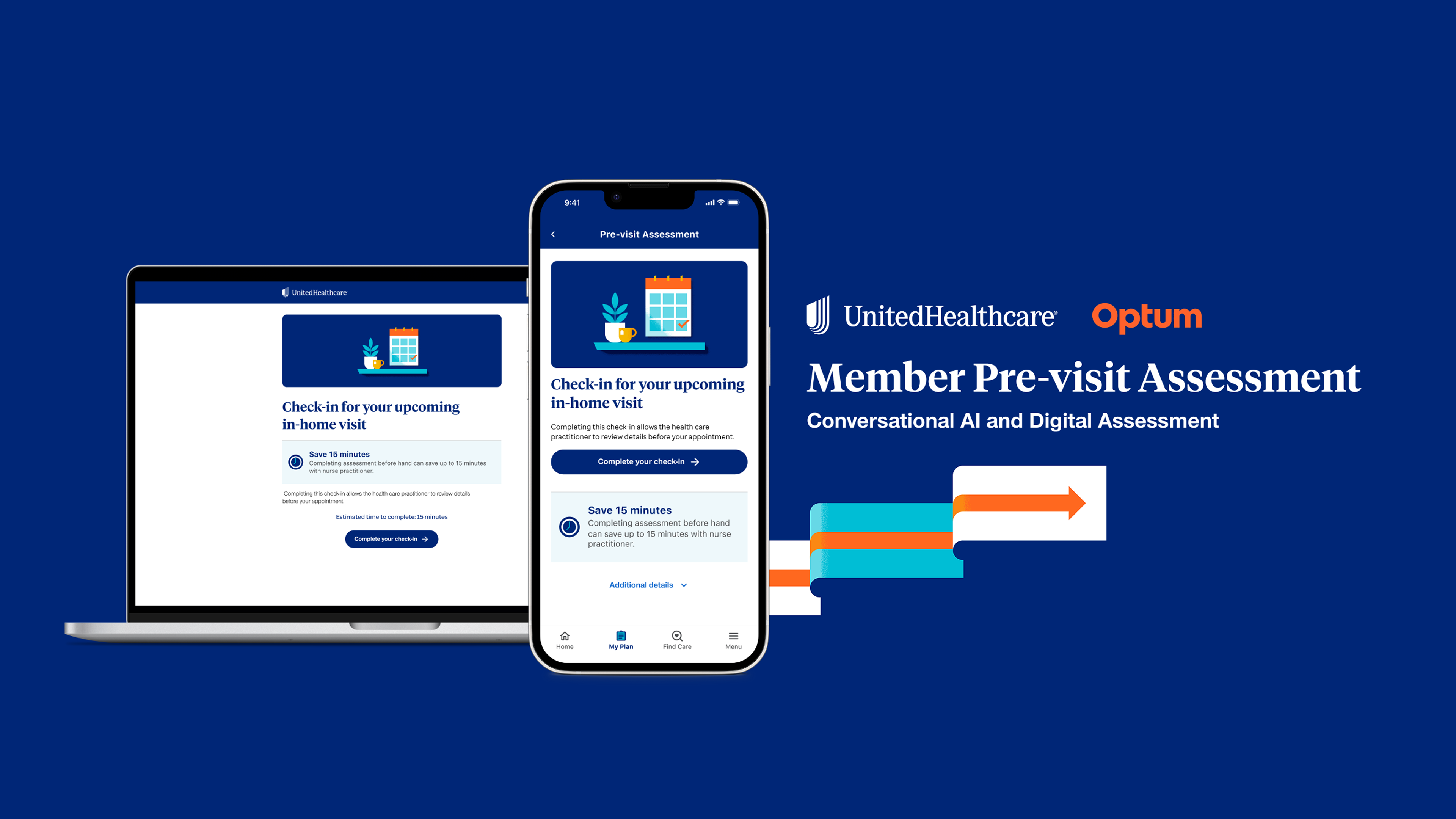
Assessment includes a thorough review of the member's health history, which usually takes about 10 minutes. To save time, members can now complete this health assessment digitally before the visit. This allows the healthcare provider to focus more on addressing the member's specific questions and needs during the in-person visit.

Impact

FACTSHEET

40%

Reduction in telephonic calls measured by monthly call volume

400K

Estimated users to be impacted

WCAG 2.2

Compliant for seniors

Mobile Prototype

Problem statement

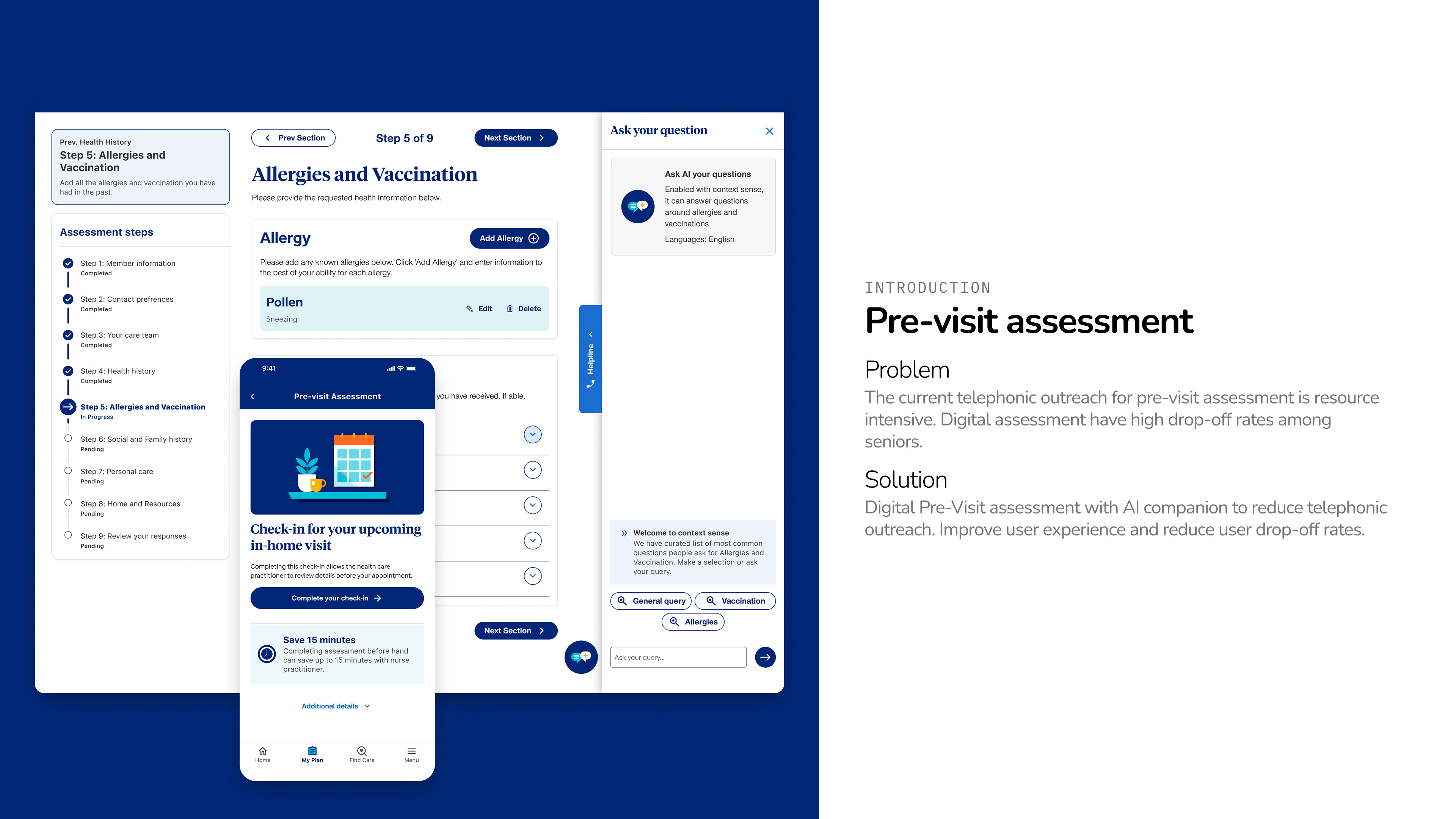
The current telephonic outreach for pre-visit assessment is resource intensive, digital assessment have high drop-off rates among seniors.

Solution

Digital Pre-Visit assessment with AI companion to reduce telephonic outreach and improve user experience and reduce user drop-off rates.

CONTRIBUTIONS

Design and Research Contributions

Streamlining Healthcare Onboarding: From Phone to Digital Assessments

Designed AI Companion for seniors

Usability optimization for seniors

Features to fix dropout rate

Planning and executing usability testing for Seniors


USER RESEARCH FOR EVALUATION OF AI AGENTS IN WORKFLOWS

Research methods

Business expectations

With 30k+ pre-visit assessments completed each month, telephonic outreach is also resource intensive. Therefore, a AI-enabled digital assessment is being introduced.

Journey map: Hypothesis first approach.

If we incorporate AI agents as assessment companions, then we expect to see a significant reduction in telephonic outreach, because of the widespread adoption of AI agents in various workflows and the general population's increasing familiarity with automated assistants

Design direction

If we incorporate AI agents as assessment companions, then we expect to see a significant reduction in telephonic outreach, because of the widespread adoption of AI agents in various workflows and the general population's increasing familiarity with automated assistants

INTERFACE DESIGN

Explorations

Interface considerations for seniors

Design for familiarity

Maintain low cognitive load

Context clarity for seniors

Fallback plan for high risk situations

Evaluation question

Do we need a companion for assessment, would we resolve for drop-out rates and satisfy usability standards for the elderly?

TRUST AND SAFETY

Trust issues with technology and AI for the elderly.

Collaborated with clinical team, UHG Accessibility team and third-party vendors to develop user testing plan.

  • Considering the needs of older adult participants. Visual impairment, Hearing impairment, Motor control, Cognitive load, Memory load, and Environmental factors.
  • Plan and setup. Optimal user recruitment for the study, defining clear goals and objectives.
  • Usability test. Use task that arerelevant to users, provide copy of each task, build trust with participants.
  • - While resources onboarding is easy, the access can be granted to anyone, but we found out later that it might compromise the resource integrity this reducing user base.

Usability testing on functional prototype.

Revelations on usability testing with elderly.

  • Most users were comfortable with the AI agent, and found it helpful. Users could follow the chain of thought process and provide answers.
  • Enhanced Communication: Clearly communication the estimated completion time (15 minutes), share benefits of completing the form in advance.
  • Improved Accessibility: Design updates should account for varied user interactions, such as zoom, touchscreen, and interruptions. Include a "save and return" feature to accommodate returning users.
  • Additional Fields for Home Visits: Introduce optional fields for specific access instructions (e.g., “use side door”) and presence of pets to better prepare for home visit scenarios.
  • Post-Submission Enhancements: Revise the final screen to include instructions for modifying or canceling appointments, and clarify form access post submission.
  • Outlier scenarios that the design system can't accommodate, thus tweaking component for senior friendly interface.
CORRECTION COURSE

Confrontations by seniors towards AI platforms post task analysis.

Key highlights

  • Predictive Allergy Mapping: 78% accuracy in pre-identifying allergens before visit. Reduces assessment time by 40% via auto-populated suggestions.
  • Cognitive Load Reduction: 92% completion of visual workflows vs 64% for text-based workflows.
  • Real-Time Clinical Integration: Auto-flags 100% of medication conflicts during entry.
FURTHER DETAILS

Let’s connect to explore the detailed findings behind the design of a senior-friendly digital platform. This solution effectively addresses cognitive, physical, and environmental challenges, streamlining onboarding while enhancing accessibility and user experience.

Let's connect, drop me at mail at abhi.saraf25@gmail.com


© Abhijeet Saraf 2026
Built withReactClaudeCursor